Letting Go and Carrying On
Nieuwe burenLetting Go and Carrying On is the difficult distinction Eva tries to make between continuing her life and abandoning Lieve, her stillborn daughter. For Eva, moving forward cannot mean forgetting that she is a mother; it means finding a different way to carry that relationship and to live in the present. The idea reaches a tender, tangible expression at Lieve’s grave, but on the beach it becomes a larger and more divisive proposal about freedom, suffering, and whether Eva and Peter still want the same life.
Grief and the Fear of Forgetting
After a night in which Eva has deeply humiliated Peter, she wakes to find him asleep on the sofa beneath a patchwork blanket. She searches herself for love, tenderness, guilt, irritation, or even the hatred she had felt the day before, and finds none. The emotional blankness does not bring relief. She realizes she has gone several hours without thinking about Lieve and is frightened by what that absence might mean.
Eva recalls Lieve’s birth through small, fragile details: her closed fists and the soft down on her head, as delicate as an eggshell. Although she never really knew her daughter, she insists inwardly on the permanence of being her mother and of loving her. The prospect of carrying on therefore contains a sharp contradiction: a respite from grief can feel like betraying the child she wants to remember. She cannot accept the idea that moving forward should require her to kill the memory or banish the image of her lifeless baby.
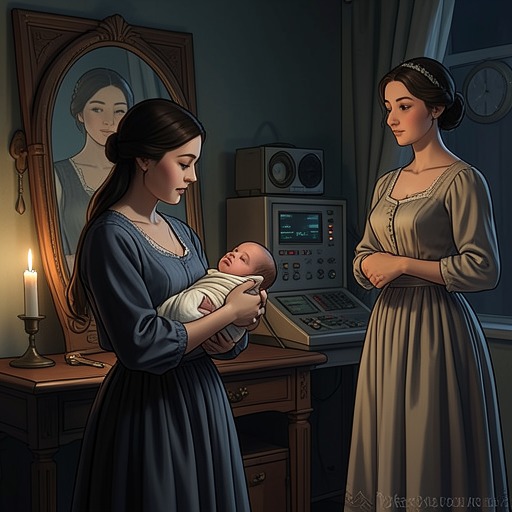
The people around Eva urge her to let go, including Hetty, Peter, her mother, and her brother. Eva resents hearing the same counsel from everyone, especially as others have long since stopped engaging with her grief. Hetty remains the person with whom Eva can talk about it for an hour, though their conversations take place in therapy. At home, Eva lights a candle beside a framed photograph of Lieve that nobody else wants to see. To others it represents the injustice of a dead baby; to Eva it is a picture of her daughter, a child who grew inside her and of whom she is proud.
The Grave as a Farewell, Not an Erasure
Eva and Peter chose to bring Lieve home and bury her, giving Eva a particular place she could visit. For a year she went to the grave every day, sometimes twice in one day. Her grief was visible even to strangers: a woman once contacted Peter at the newspaper after finding Eva lying on the grave, crying with her fists pressed against her stomach, and had approached to check that she was alive.
At the farewell, Eva addresses Lieve as both parents’ daughter and promises that they must continue, but will not leave her behind. She says she may no longer come every day, while affirming that she thinks of Lieve constantly and will remain her mother. The distinction is central to Eva’s understanding of letting go: changing the daily practice of mourning does not cancel the bond or revise the past.
She kisses the gravestone and places a small stone angel among the forget-me-nots, saying it will watch over Lieve when she is absent. Peter admires Eva’s ability to believe that Lieve has become an angel and is somehow near them, but admits that he cannot share that belief. The angel thus gives form to Eva’s continuing relationship with her daughter, while also marking the difference between her faith and Peter’s skepticism. They do not cry as they leave. Eva takes Peter’s hand, and he strokes her curls and kisses her ear; as they walk away together, he feels lighter. Their departure is not proof that grief has ended, but a shared bodily gesture of taking the next step.
Freedom and a New Account of the Past
The couple continue from the cemetery to the beach. There, Eva proposes lying on the quieter nude beach and undresses, calling the experience freedom. Peter is uneasy among the naked beachgoers, but refrains from complaining. Eva presents her change not as a return to their old, conventional patterns, but as a deliberate effort to move forward differently.
She has thought about what the previous year’s pain means. In her interpretation, events have happened for a reason: she and Peter failed to listen to what their suffering was telling them, the lessons became harsher, they lost Lieve, and Steef and Rebecca entered their lives. This is Eva’s attempt to make meaning of catastrophe, not a confirmed explanation for Lieve’s death. She also says that she has spent years imagining that life would begin in earnest once they had a child. Perhaps, she suggests, the intensity of their wish for a child let them postpone living in the present and avoid asking whether they belonged together or wanted the same things.
Peter rejects her account. He hears her speaking for both of them and protests that he has accommodated her: he built the house she wanted, accepted their limited sex life, forgave her for letting the neighbor touch her, and went with her to therapy. His anger exposes the gap between what Eva calls freedom and what Peter experiences as the possible end of their marriage. For Eva, moving on requires questioning the life they built around the hope of a child; for Peter, her questioning threatens the love and partnership he believes he has kept intact.
Peter’s Fear of Being Left Behind
As Eva speaks, Peter realizes that her language of release may apply not only to Lieve but to him. Across the distance between them, he sees his wife as familiar and yet suddenly changed: she is painting her nails and exposing her body, and he cannot fit these choices into his existing picture of her. The interpretation is his, and his fear gives it urgency. He wants to hold on to Eva forever and believes he is nothing without her.
Peter decides that he has no choice but to do things her way, as long as she stays. His response contrasts with the farewell at the grave. Eva’s promise to Lieve makes room for absence while preserving love; Peter’s plea to keep Eva turns adaptation into a bargain against separation. The concept therefore remains unsettled between a mutual attempt to resume life and a profound disagreement about what that life should be. Eva’s letting go may be an act of agency and renewed presence, but Peter hears it as the beginning of loss—and answers by clinging to the person he is afraid to lose.